Skin cancer affects over 1.5 million people globally each year, with melanoma being the most dangerous form—responsible for approximately 60,000 deaths annually. Early detection dramatically improves survival rates, with the 5-year survival rate for localized melanoma exceeding 99%. Yet dermatologist shortages and long wait times create dangerous delays in diagnosis. Artificial intelligence is changing this paradigm.
AI-Powered Skin Cancer Screening
The intersection of computer vision and dermatology has produced some of the most clinically validated AI applications in medicine. A landmark study published in Annals of Oncology demonstrated that a CNN-based AI system achieved 95% sensitivity in detecting melanoma—outperforming a panel of 58 dermatologists who averaged 86.6% sensitivity.
These results are not isolated. A comprehensive 2026 meta-analysis reviewed 52 studies of AI-based dermatology tools and found consistent performance exceeding that of general practitioners and matching specialist-level accuracy for malignant lesion identification.
How AI Dermatology Works
Deep Learning on Dermoscopic Images
Modern AI dermatology systems use convolutional neural networks (CNNs) trained on hundreds of thousands of dermoscopic images. These models analyze visual features including:
- Asymmetry patterns in pigmented lesions
- Border irregularity and sharpness transitions
- Color distribution and atypical pigment networks
- Diameter and evolution tracking over time
- Dermoscopic structures such as blue-white veil, regression areas, and atypical vessels
Real-Time Analysis with Digital Dermatoscopy
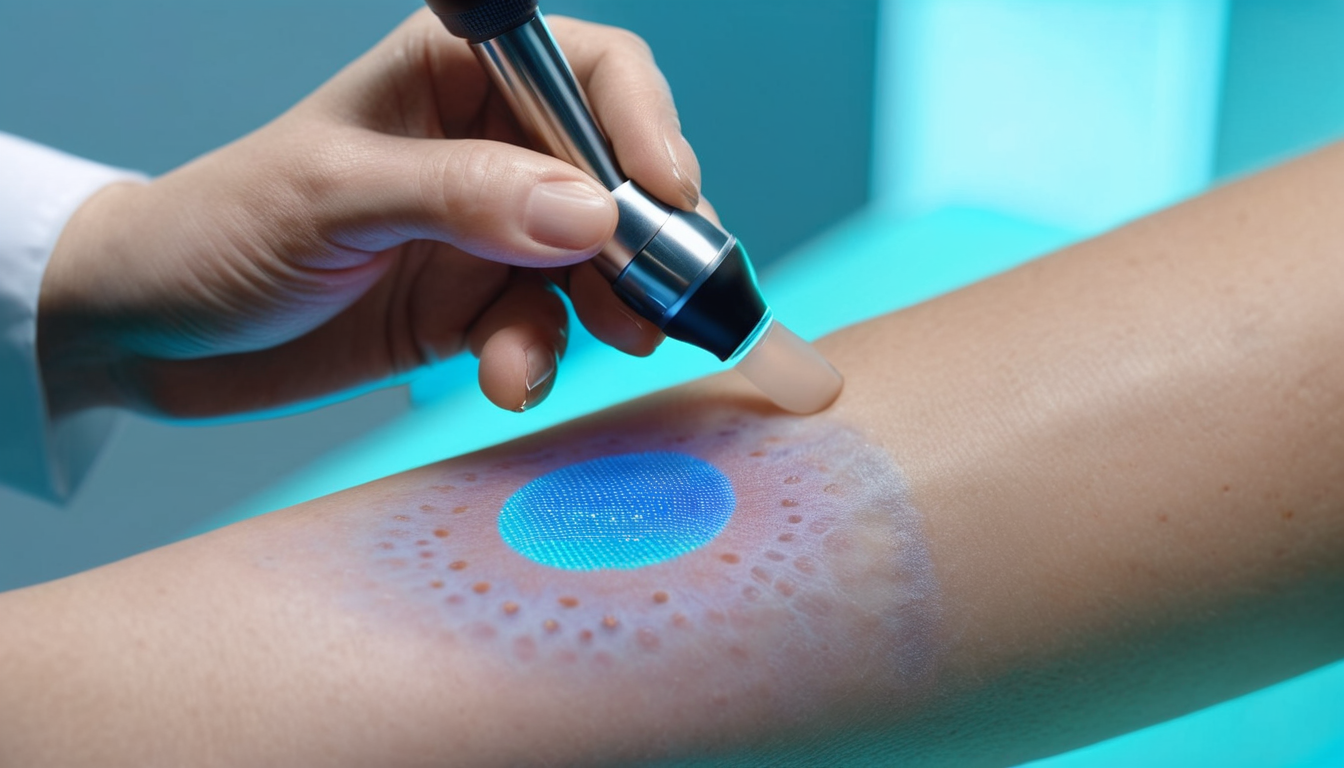
AI-powered dermatoscopes now provide real-time analysis during skin examinations. These devices capture high-resolution images of lesions and instantly apply AI algorithms to assess malignancy risk. The technology overlays analysis indicators—bounding boxes, risk scores, and feature highlights—directly on the lesion image, supporting dermatologists in their clinical decision-making.
Beyond Cancer: AI for Inflammatory Skin Conditions
AI dermatology applications extend well beyond cancer screening. Recent advances include:
- Psoriasis severity scoring using AI-analyzed body surface area involvement
- Eczema assessment through image-based inflammation grading
- Acne analysis with automated lesion counting and severity classification
- Drug eruption identification by matching rash patterns to known adverse reaction databases
Accessibility: The Real Game-Changer
Perhaps the most significant impact of AI dermatology is on accessibility. In many regions, dermatologist wait times exceed 3 months. AI-powered screening tools available through smartphone apps and platforms like AI Doctor can provide preliminary assessments within minutes, helping patients understand whether a lesion warrants urgent specialist referral.
Our Dermatology AI specialist at AI Doctor enables users to describe skin concerns and receive AI-guided preliminary assessments based on their symptoms and descriptions. While not a replacement for in-person dermatological examination, this tool helps prioritize urgent cases and educates patients about warning signs.
The Evidence Base
AI dermatology has one of the strongest evidence bases among AI medical applications:
- Multiple peer-reviewed studies confirm specialist-level accuracy for melanoma detection
- FDA approval has been granted for several AI-based dermatology diagnostic devices
- The European Academy of Dermatology and Venereology recognizes AI as a valuable adjunct tool
- Real-world deployment data shows AI tools improve early detection rates in primary care settings
Limitations and Responsible Use
Despite impressive results, AI dermatology has important limitations:
- AI performance can degrade on rare lesion types underrepresented in training data
- Skin type bias remains a concern—many models were trained primarily on lighter skin tones
- AI cannot assess palpation characteristics such as lesion firmness or temperature
- Clinical context including patient history remains essential for accurate diagnosis
This is why AI Doctor positions its dermatology tools as decision-support systems, not autonomous diagnostic devices. Every assessment includes clear guidance on when to seek in-person professional evaluation.
The Future of AI Dermatology
Looking forward, we expect AI dermatology to evolve toward:
- Total-body photography integration with automated change detection over time
- Multi-modal analysis combining visual, thermal, and genetic data
- Improved equity through training datasets that better represent all skin types
- Integration with electronic health records for comprehensive patient assessment
Medical Disclaimer: This article is for educational purposes only and does not constitute medical advice. Any suspicious skin lesion should be evaluated by a qualified dermatologist. AI Doctor provides general health information and does not replace professional medical diagnosis.