Skin is the body's largest organ, and it tells us more about our health than most people realize. While AI skin cancer detection has made headlines, the real revolution in AI dermatology goes far beyond melanoma screening — encompassing the full spectrum of skin health from acne to aging, eczema to psoriasis.
AI Skin Cancer Detection: The Foundation
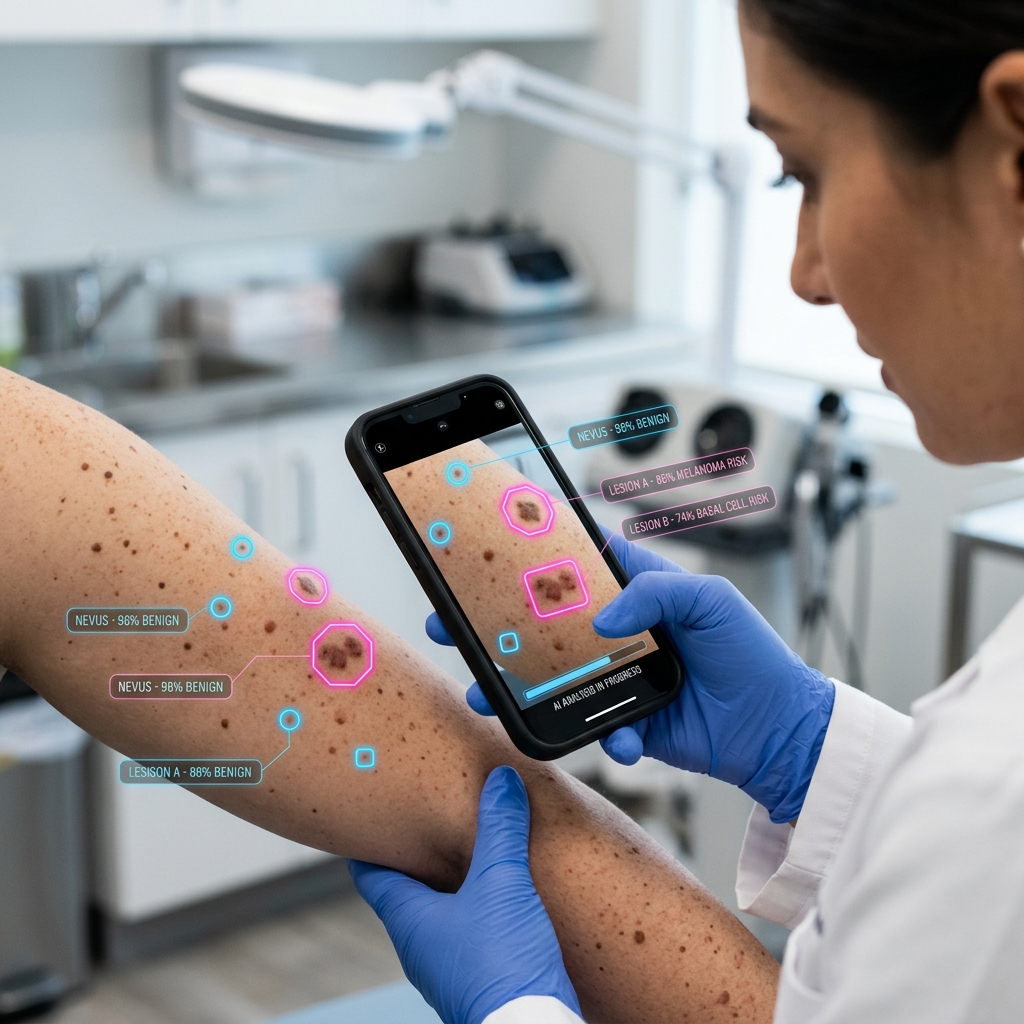
Deep learning models trained on hundreds of thousands of dermatoscopic images now classify skin lesions with dermatologist-level accuracy. These AI systems distinguish:
- Melanoma from atypical nevi (sensitivity >95%)
- Basal cell carcinoma from benign growths
- Squamous cell carcinoma from actinic keratoses
- Pigmented versus non-pigmented lesions
Smartphone apps now bring this capability to consumers, allowing anyone to photograph a suspicious mole and get an instant risk assessment — a powerful triage tool that directs high-risk cases to dermatologists.
AI Acne Analysis and Treatment
Acne affects 9.4% of the global population, making it the eighth most prevalent disease worldwide. AI dermatology platforms now offer:
- Automated acne grading: AI counts and classifies lesions (comedones, papules, pustules, nodules) from smartphone photos
- Treatment tracking: Progress photos analyzed by AI show improvement quantitatively, not just subjectively
- Product recommendations: AI suggests topical treatments based on acne type, skin type, and ingredient compatibility
- Trigger identification: AI correlates flare-ups with dietary, hormonal, and environmental factors
AI Eczema and Psoriasis Monitoring
Chronic inflammatory skin conditions require ongoing monitoring. AI systems now:
- Calculate affected body surface area (BSA) from full-body photos
- Score severity using standard clinical indices (EASI, PASI) automatically
- Track treatment response over time with objective measurements
- Predict flare-ups based on environmental and biometric data
AI-Powered Skincare Personalization
Beyond medical conditions, AI is revolutionizing skincare. AI platforms analyze skin photos to assess:
- Hydration levels and barrier function
- Wrinkle depth and skin elasticity
- Pigmentation and sun damage
- Pore size and sebum production
- Skin age versus chronological age
Based on this analysis, AI recommends personalized skincare routines with specific active ingredients — taking the guesswork out of skincare product selection.
Accessibility and the Future
With 3 billion smartphone users and dermatologist shortages worldwide, AI dermatology tools are filling a critical gap. In regions with zero dermatologists, AI screening programs are enabling early detection of skin diseases that would otherwise go untreated.
Ready to take control of your health? Try our AI Doctor today and get personalized medical insights in seconds.