
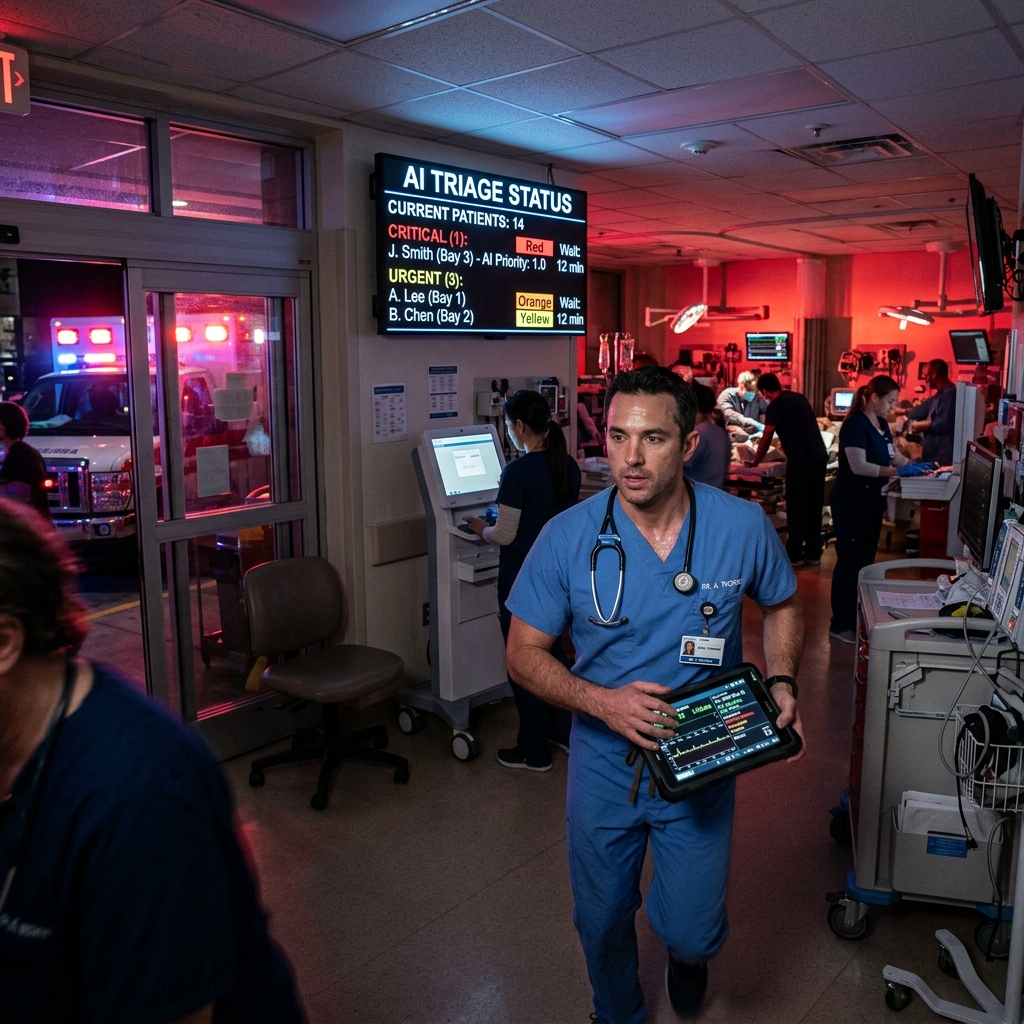
In emergency medicine, seconds can mean the difference between life and death. Overcrowded ERs, physician shortages, and the pressure of split-second decisions create an environment where mistakes can be fatal. Artificial intelligence is now serving as an always-alert, never-fatigued assistant in emergency departments worldwide.
AI Stroke Triage
Time is brain during a stroke — every minute of delay destroys 1.9 million neurons. AI systems performing automated CT scan analysis can:
- Detect intracranial hemorrhage in under 60 seconds
- Quantify ischemic core and penumbra volumes for thrombectomy decisions
- Automatically alert the stroke team before the radiologist has reviewed the scan
- Identify large vessel occlusions requiring immediate intervention
Hospitals using AI stroke triage systems report reducing door-to-needle times by 40%, meaning more patients receive clot-busting medication within the critical 60-minute window.
AI Sepsis Alerts in the ER
Sepsis is the leading cause of death in hospitals, and emergency departments are where most sepsis cases first present. AI systems continuously monitor incoming patient data:
- Real-time risk scoring from vital signs, lab results, and triage data
- Alerts up to 6 hours before septic shock develops
- Automated lactate ordering and fluid resuscitation reminders
- 20% reduction in sepsis mortality in hospitals with AI alert systems
AI Trauma Assessment
AI systems help emergency physicians rapidly assess trauma patients:
- Whole-body CT analysis: AI detects internal bleeding, organ damage, and skeletal injuries simultaneously
- Trauma severity scoring: AI calculates injury severity scores automatically from imaging and clinical data
- Triage optimization: AI prioritizes which patients need immediate intervention versus which can safely wait
- Burn assessment: AI analyzes burn photos to calculate total body surface area affected and recommend fluid resuscitation
AI for Cardiac Emergencies
AI systems analyzing ECG data in the ER can detect:
- ST-elevation myocardial infarction (STEMI) with 97% accuracy, triggering cath lab activation
- Subtle ECG changes suggesting hyperkalemia or other electrolyte disorders
- Atrial fibrillation in patients presenting with stroke, enabling anticoagulation decisions
- Pulmonary embolism risk stratification from ECG and clinical data
AI Triage and Patient Flow
Beyond clinical decisions, AI is optimizing ER operations:
- Predicting which patients can be safely discharged versus admitted
- Forecasting ER volume to optimize staffing
- Identifying patients likely to deteriorate in the waiting room
- Reducing length of stay by 25% through AI-guided patient flow
The Future of AI in Emergencies
AI is extending emergency care beyond hospital walls. Drones equipped with AI diagnostic tools are being tested to deliver automated defibrillators to cardiac arrest scenes. AI-powered dispatch systems optimize ambulance routing in real-time. The future of emergency medicine is AI-augmented, and it's saving lives today.
Ready to take control of your health? Try our AI Doctor today and get personalized medical insights in seconds.