
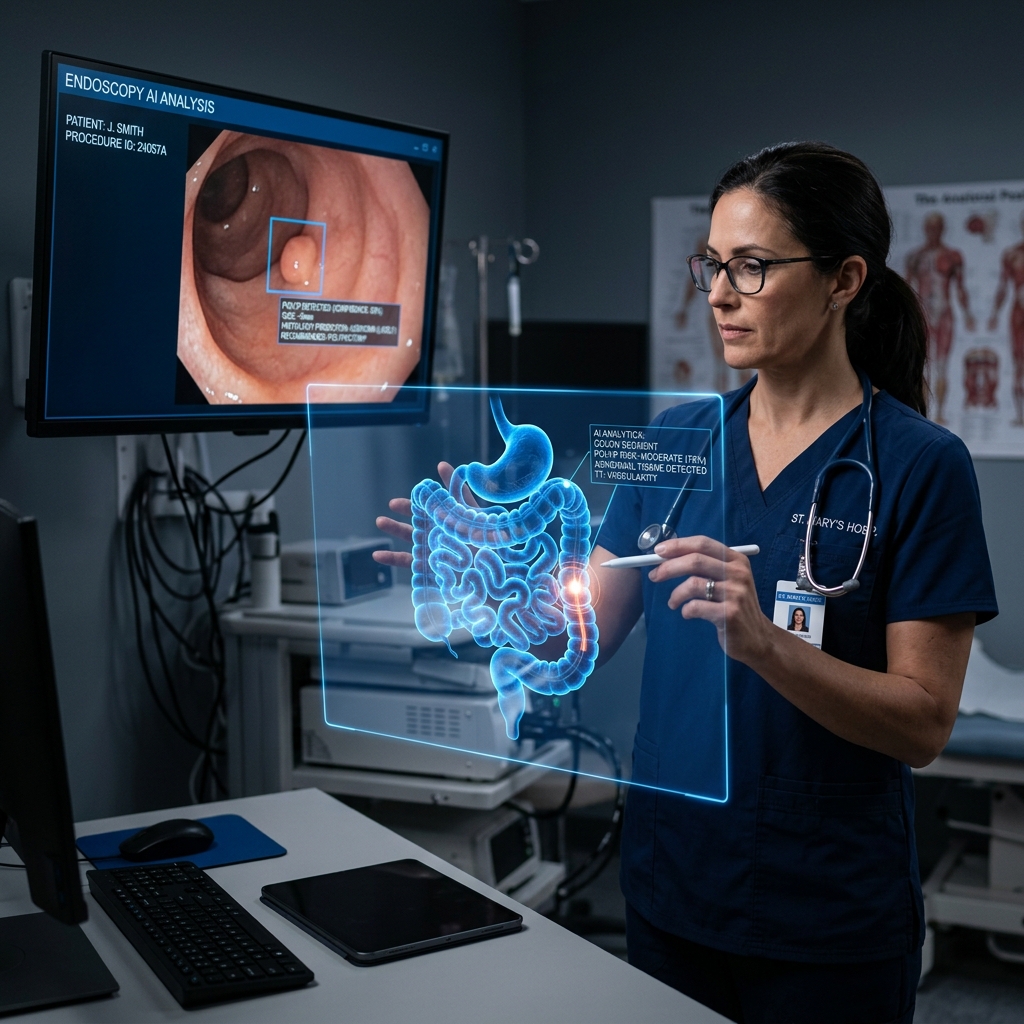
Digestive diseases affect millions worldwide, with colorectal cancer as the second leading cause of cancer death globally. The good news: most digestive diseases are preventable or treatable when caught early. Artificial intelligence is now making screening smarter, faster, and more accurate than ever before.
AI-Assisted Colonoscopy
Colonoscopy is the gold standard for colorectal cancer screening, but even experienced endoscopists miss 20-25% of adenomas. AI systems performing real-time computer-aided detection (CADe) during colonoscopy are changing that:
- 27% increase in adenoma detection rate — the most important quality metric in colonoscopy
- Real-time polyp characterization (CADx) distinguishing adenomatous from hyperplastic polyps
- Automatic blind spot detection during colonoscope withdrawal
- Procedure quality scoring and feedback for endoscopists
FDA-approved systems like GI Genius and ENDO-AID are now widely deployed, and studies show their benefit is greatest for less experienced endoscopists — effectively democratizing expert-level detection.
Non-Invasive Liver Assessment
Liver disease is often silent until advanced stages. AI is enabling earlier detection through non-invasive methods:
AI-Enhanced Elastography
AI algorithms improve the accuracy of liver stiffness measurements, detecting fibrosis stages with precision that approaches biopsy — without the needles or risks.
AI Analysis of Routine Blood Tests
Machine learning models identify patterns in standard liver function panels that predict advanced fibrosis, cirrhosis, and hepatocellular carcinoma risk — flagging patients who need further evaluation years before symptoms appear.
IBD Monitoring with AI
Inflammatory bowel disease (Crohn's disease and ulcerative colitis) requires lifelong monitoring. AI systems are transforming IBD care:
- Endoscopic severity scoring with AI analysis of colonoscopy images
- Predictive models identifying patients at risk of flares before symptoms occur
- AI analysis of stool frequency and consistency data from patient-reported apps
- Medication optimization based on biomarker trends and AI predictions
AI in Upper GI Endoscopy
AI systems are also enhancing upper endoscopy (EGD) by detecting:
- Early esophageal cancer in Barrett's esophagus surveillance
- Gastric cancer precursor lesions
- Helicobacter pylori infection indicators
- Esophagitis severity grading
The Future: AI and the Gut Microbiome
AI is now being used to analyze gut microbiome composition and its relationship to digestive diseases. By correlating microbial profiles with clinical outcomes, AI can recommend targeted probiotic therapies, dietary interventions, and personalized treatment approaches that were impossible just a few years ago.
Ready to take control of your health? Try our AI Doctor today and get personalized medical insights in seconds.