
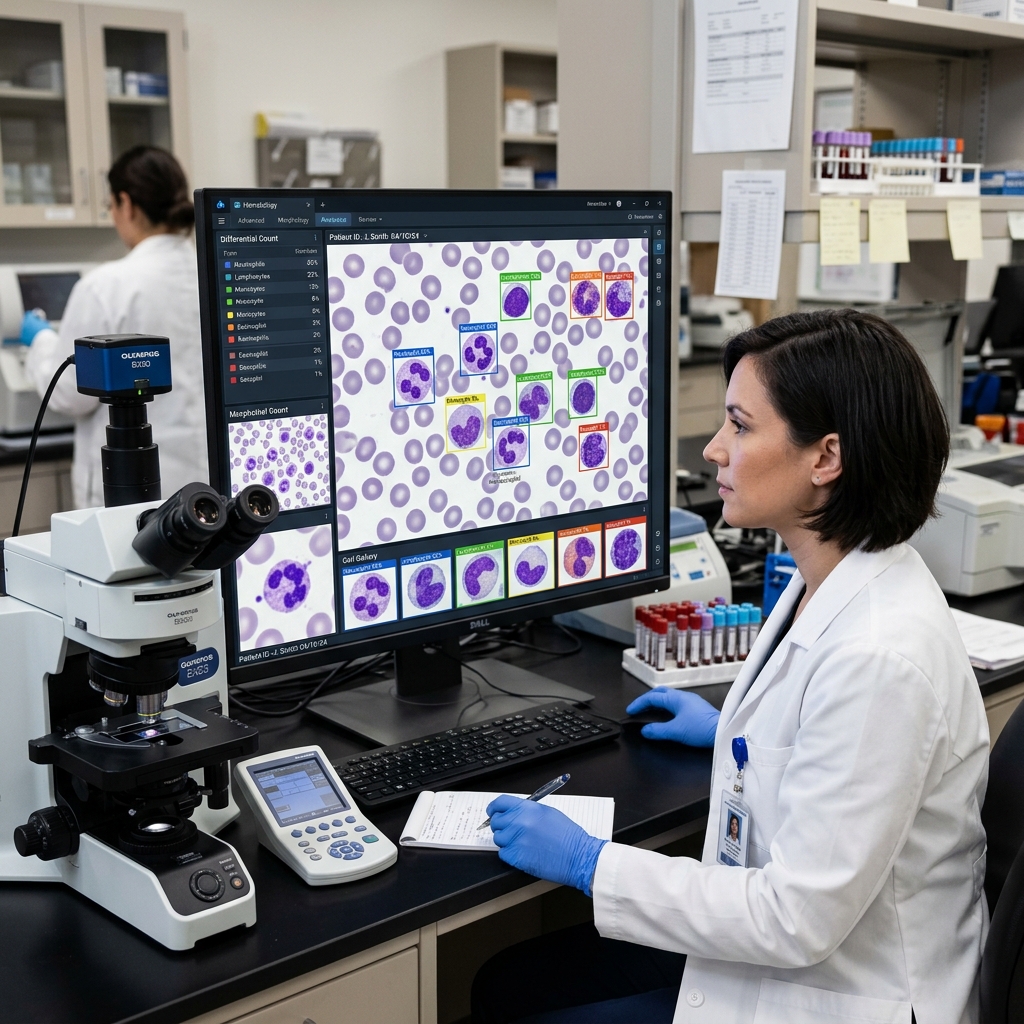
Blood carries information about virtually every aspect of our health. A simple complete blood count (CBC) can reveal infections, anemia, leukemia, and dozens of other conditions. Artificial intelligence is now extracting more diagnostic value from blood tests than ever before — turning routine lab work into a powerful early disease detection tool.
AI Blood Smear Analysis
Traditional blood smear review requires a trained technologist to manually examine cells under a microscope — a time-consuming, subjective process. AI systems now automate this with remarkable precision:
- Cell classification: AI identifies and counts all blood cell types (RBCs, WBCs, platelets) with >98% accuracy
- Abnormal cell detection: AI flags blast cells, atypical lymphocytes, and other abnormal morphology
- Parasite detection: AI identifies malaria parasites on blood smears with 99%+ sensitivity
- RBC morphology: AI classifies cell shapes (sickle cells, target cells, schistocytes) indicating specific diseases
Early Leukemia Detection
AI models analyzing CBC results can flag patterns suggestive of leukemia before obvious abnormalities appear. These systems detect:
- Subtle blast cell elevations in differential counts
- Cytopenia patterns inconsistent with common causes
- Cell index abnormalities (MCV, MCH, RDW) suggesting marrow pathology
- Trends over time indicating progressive marrow dysfunction
Early referral to hematologists based on AI flags has been shown to reduce time-to-diagnosis for acute leukemias by weeks — critical time when treatment success depends on early intervention.
AI in Anemia Workup
Anemia affects 1.6 billion people globally. AI systems streamline anemia diagnosis by:
- Determining anemia type (microcytic, macrocytic, normocytic) from CBC indices
- Recommending targeted follow-up tests (iron studies, B12, folate, reticulocyte count)
- Correlating anemia with chronic disease markers
- Predicting response to iron supplementation based on hepcidin and ferritin trends
AI Transfusion Management
Blood transfusions save lives but carry risks. AI systems optimize transfusion practice:
- Predicting which patients will need transfusions based on trending hemoglobin and surgical procedure
- Minimizing unnecessary transfusions by identifying patients who will recover spontaneously
- Matching blood products to patient needs (RBCs, platelets, plasma) based on AI-guided algorithms
- Monitoring for transfusion reactions using vital sign trends
The Future of AI Hematology
AI is now being combined with flow cytometry data, genetic testing, and bone marrow biopsy images to provide comprehensive hematological assessment. These multimodal AI systems promise earlier detection of blood disorders, more precise diagnoses, and personalized treatment recommendations.
Ready to take control of your health? Try our AI Doctor today and get personalized medical insights in seconds.