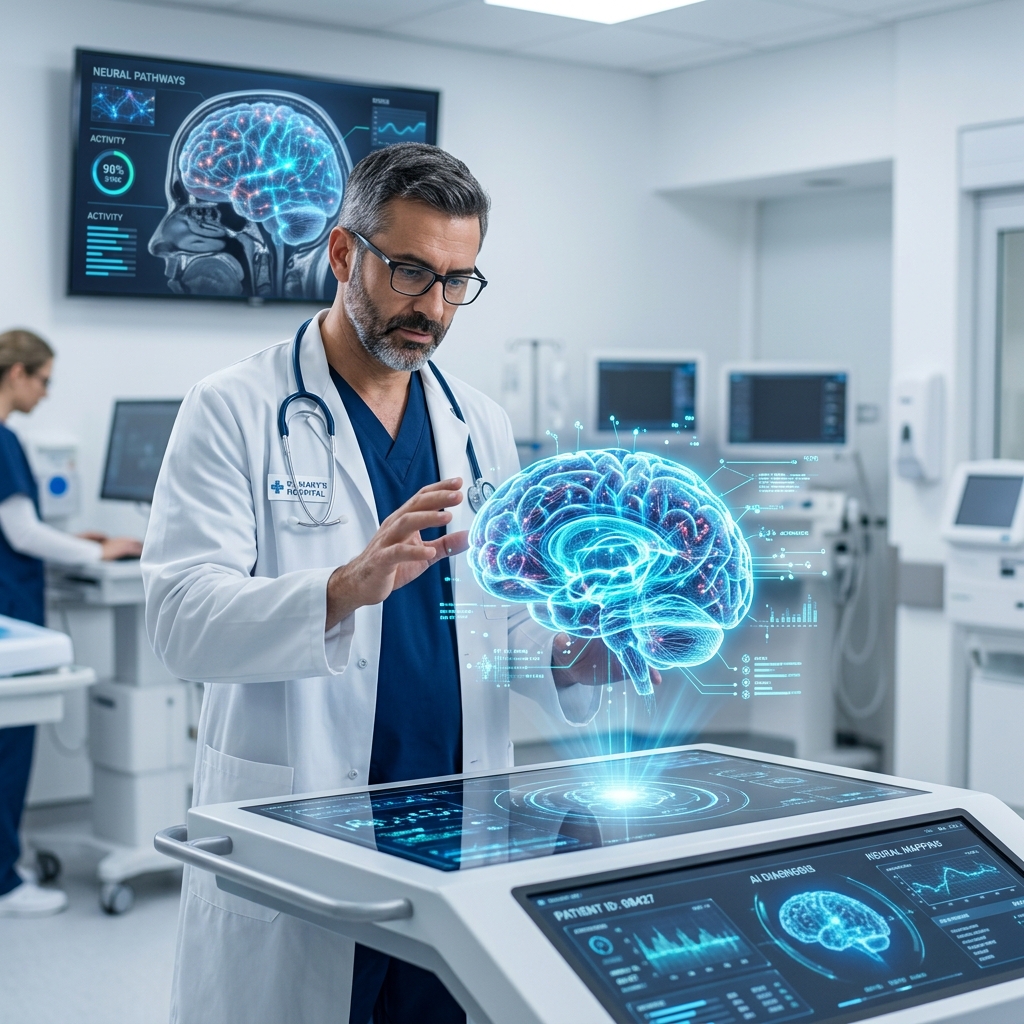
Neurological disorders affect over one billion people worldwide, yet many remain undiagnosed until significant brain damage has already occurred. Artificial intelligence is now changing that paradigm, offering unprecedented capabilities in early detection, monitoring, and treatment planning for conditions that were once considered manageable only after symptoms became severe.
The AI Neurology Revolution
From Alzheimer's disease to Parkinson's, epilepsy to multiple sclerosis, AI algorithms are now capable of detecting subtle patterns in brain imaging data that human eyes simply cannot see. Deep learning models trained on millions of MRI and CT scans can identify early-stage neurodegeneration years before clinical symptoms manifest.
Early Alzheimer's Detection
Researchers have developed AI models that analyze brain MRI scans with up to 94% accuracy in predicting whether mild cognitive impairment will progress to Alzheimer's disease within five years. These models examine hippocampal volume, cortical thickness, and white matter integrity — biomarkers that are nearly impossible to assess visually with the same precision.
Stroke Prediction and Acute Care
AI systems can now analyze CT scans of stroke patients in under 60 seconds, identifying the type, location, and severity of the stroke. This rapid triage capability is saving lives in emergency departments where every minute translates to approximately 1.9 million lost neurons.
Key Applications of AI in Neurology
- Automated MRI analysis: AI algorithms detect abnormalities in brain scans with radiologist-level accuracy
- EEG interpretation: Machine learning models identify seizure patterns and predict epileptic episodes
- Parkinson's monitoring: Smartphone-based AI tracks tremor severity and medication response
- Migraine prediction: AI analyzes weather, sleep, and stress data to forecast migraine attacks
- Personalized treatment: AI models recommend optimal medication combinations based on patient genetics
The Future of AI-Powered Brain Health
Wearable AI devices are entering clinical trials, offering continuous brain health monitoring through EEG-enabled headbands. These devices can detect seizure onset, track sleep quality, and even monitor cognitive decline progression in real-time.
The integration of AI with genetic testing is opening new frontiers. By combining brain imaging data with genetic markers, AI systems can now stratify patients by disease risk with remarkable precision, enabling truly personalized neurological care.
Challenges and Opportunities
While AI in neurology shows enormous promise, challenges remain. Data privacy concerns, the need for diverse training datasets, and regulatory approval processes all present hurdles. However, the potential to detect brain diseases years earlier than current methods — when interventions are most effective — makes this one of the most exciting frontiers in medicine.
Ready to take control of your health? Try our AI Doctor today and get personalized medical insights in seconds.