
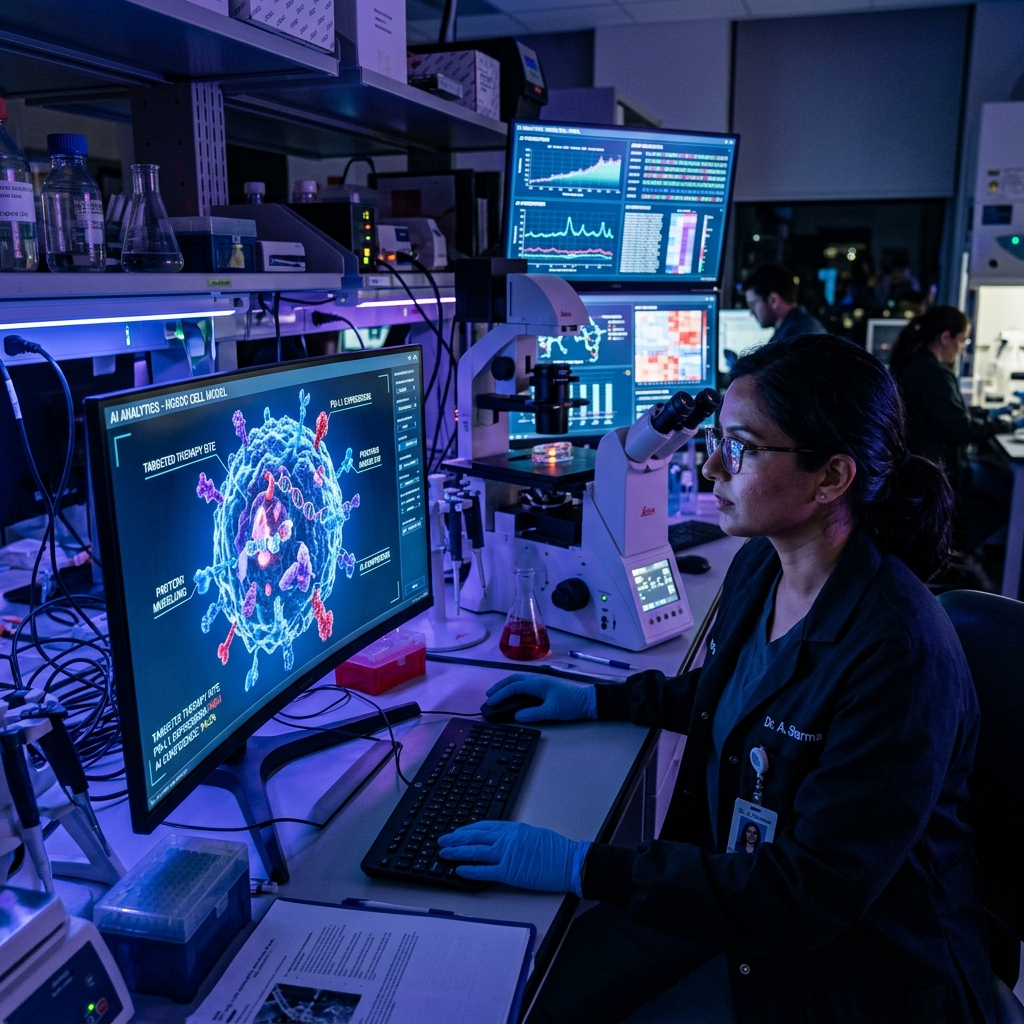
Cancer remains one of humanity's greatest health challenges, with nearly 20 million new cases diagnosed annually worldwide. Artificial intelligence is now offering hope on multiple fronts — from detecting tumors years earlier than conventional methods to tailoring treatments to each patient's unique cancer profile.
Early Cancer Detection with AI
AI algorithms analyzing medical images can detect cancers at stages when they are most treatable. Studies show AI matching or exceeding radiologist performance in detecting:
- Breast cancer: AI mammography analysis reduces false positives by 5.7% and false negatives by 9.4%
- Lung cancer: Low-dose CT AI screening detects stage I lung cancer with 94% sensitivity
- Colorectal cancer: AI-assisted colonoscopy increases adenoma detection rate by 27%
- Prostate cancer: AI MRI analysis achieves 89% accuracy in clinically significant cancer detection
- Skin cancer: Deep learning models distinguish melanoma from benign lesions with dermatologist-level accuracy
Personalized Treatment Planning
Every tumor is unique. AI systems analyze genomic sequencing data, tumor pathology, and patient medical history to recommend personalized treatment protocols. These systems consider:
Multimodal Data Integration
AI combines data from multiple sources to create a comprehensive tumor profile:
- Genomic mutations and biomarker expression
- Tumor histology and grading
- Patient comorbidities and medication interactions
- Clinical trial eligibility based on molecular markers
- Predicted response to immunotherapy, chemotherapy, and targeted therapies
Real-Time Treatment Monitoring
AI is enabling oncologists to track treatment response in real-time. By analyzing serial imaging and blood biomarkers, AI systems can detect whether a tumor is responding to therapy weeks earlier than traditional response criteria. This allows rapid treatment adaptation — switching therapies before resistance develops.
Liquid Biopsies and AI
Circulating tumor DNA (ctDNA) analysis combined with AI is revolutionizing cancer monitoring. A simple blood draw can detect tumor DNA fragments, and AI algorithms distinguish cancer-specific mutations from benign genetic noise. This technology enables:
- Post-treatment recurrence detection months before imaging
- Monitoring of minimal residual disease
- Early detection of treatment resistance mutations
The Path Forward
AI in oncology is not replacing physicians — it is empowering them. By processing vast datasets that no human could analyze manually, AI helps oncologists make more informed decisions. The result is earlier detection, more effective treatments, and ultimately, more lives saved.
Ready to take control of your health? Try our AI Doctor today and get personalized medical insights in seconds.