Vision loss affects hundreds of millions globally, yet up to 80% of visual impairment cases are preventable with early detection. Artificial intelligence is now bringing diagnostic-grade eye care to places and populations that have never had access to ophthalmologists, while also enhancing the capabilities of specialists in top hospitals.
AI Retinal Screening: A Game Changer
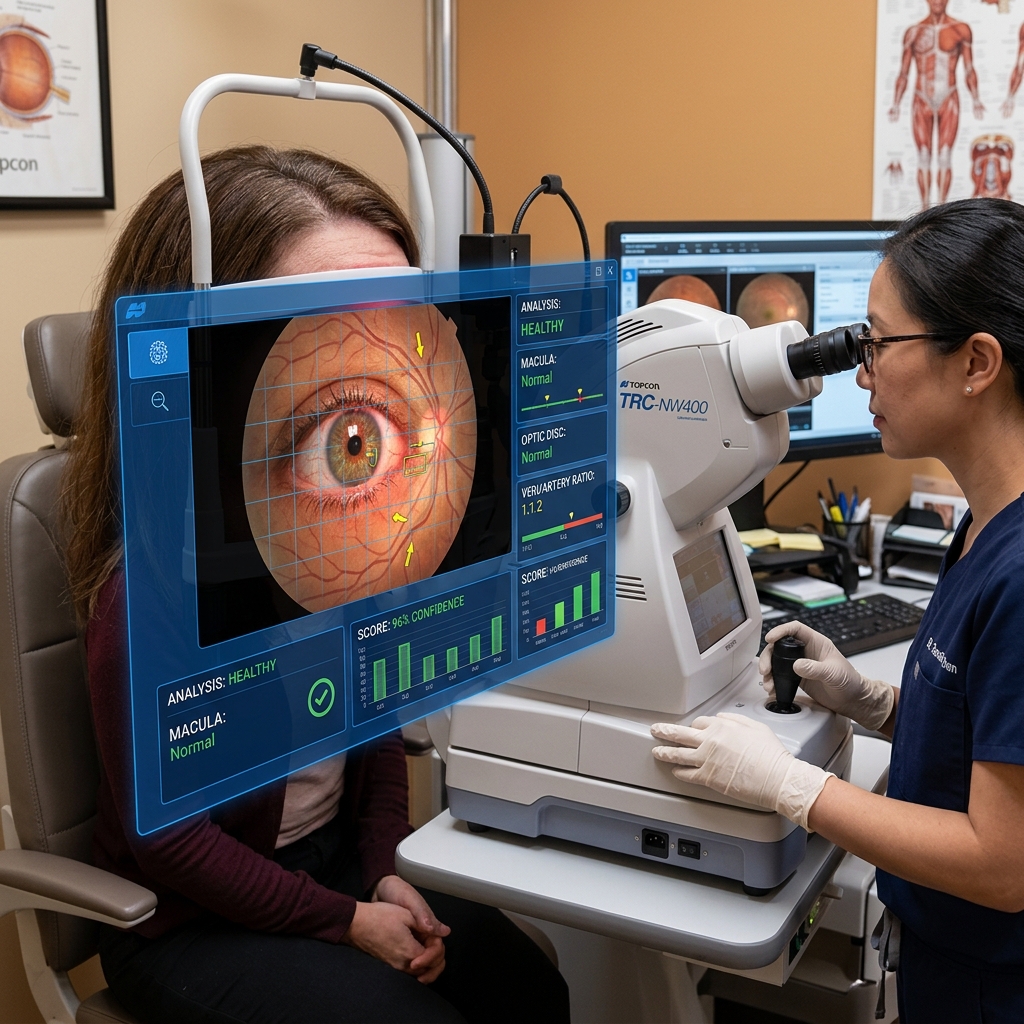
Diabetic retinopathy is the leading cause of blindness in working-age adults. AI systems like IDx-DR have received FDA approval for autonomous diabetic retinopathy screening, achieving 87% sensitivity and 91% specificity — performance that matches or exceeds human specialists. These systems can analyze a single retinal image in under 30 seconds.
How AI Retinal Analysis Works
Deep convolutional neural networks process retinal fundus images, identifying microaneurysms, hemorrhages, exudates, and neovascularization. The same technology can detect signs of:
- Glaucoma (by analyzing optic nerve head morphology)
- Age-related macular degeneration (AMD)
- Hypertensive retinopathy
- Papilledema (elevated intracranial pressure)
- Cardiovascular risk markers visible in the retina
AI in Cataract Surgery
Robotic-assisted cataract surgery guided by AI is achieving unprecedented precision. AI systems analyze pre-operative measurements to determine optimal intraocular lens power, predict post-operative visual acuity, and guide surgeons during the procedure with real-time feedback.
Predictive Glaucoma AI Models
Glaucoma, often called the "silent thief of sight," damages the optic nerve irreversibly. AI predictive models analyze IOP measurements, OCT scans, and visual field tests to identify glaucoma progression up to 18 months earlier than traditional methods. Early intervention can prevent permanent vision loss.
Accessibility and Global Impact
In developing regions where ophthalmologists are scarce — sometimes one per million people — AI screening programs deployed via smartphone attachments are screening thousands of patients per day. A single community health worker can capture retinal images that AI analyzes instantly, referring only high-risk patients to specialists.
The Future: AI and Gene Therapy
AI is now being used to identify candidates for emerging gene therapies targeting inherited retinal diseases. By analyzing genetic data alongside retinal imaging, AI can predict which patients will benefit most from treatments like Luxturna, the first FDA-approved gene therapy for an inherited disease.
Ready to take control of your health? Try our AI Doctor today and get personalized medical insights in seconds.