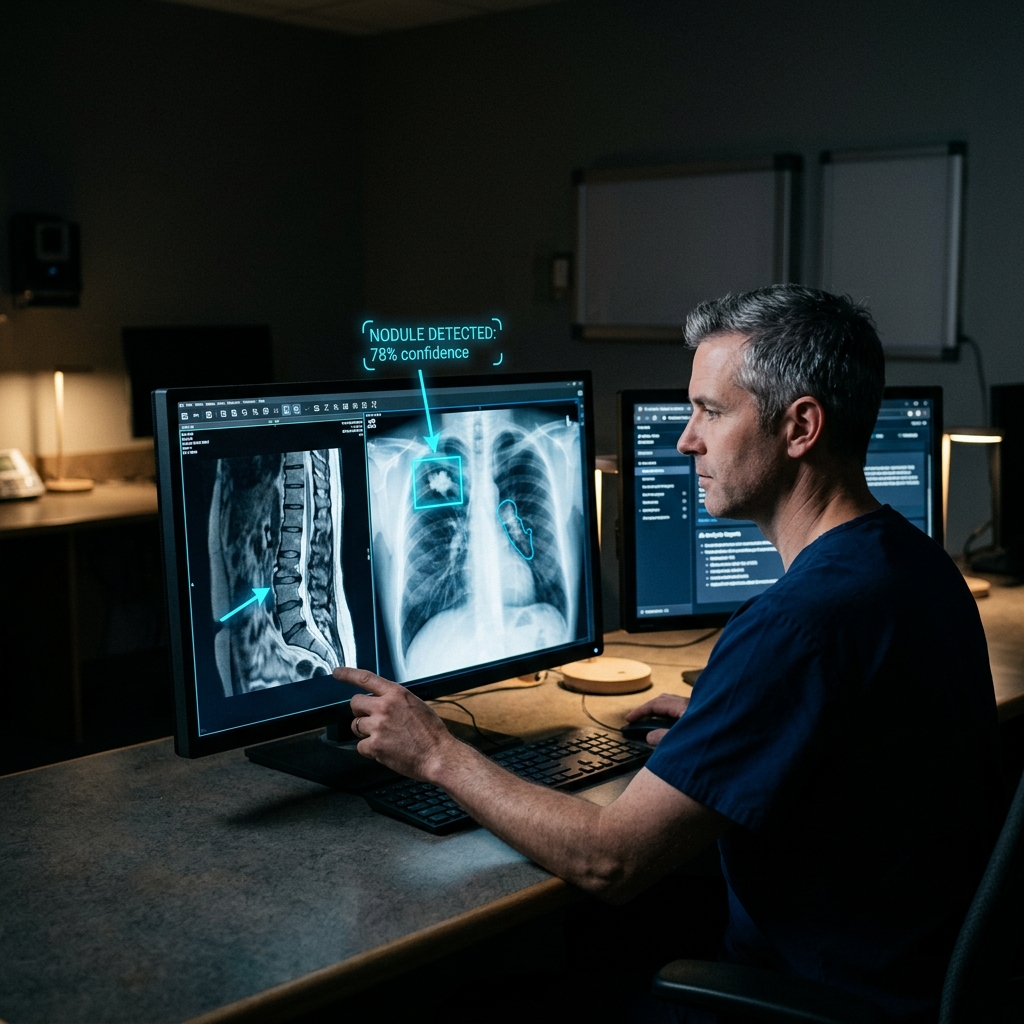
Medical imaging is the cornerstone of modern diagnosis, with over 3.6 billion imaging procedures performed annually worldwide. But radiologists face an overwhelming volume of scans, leading to fatigue, delays, and occasional missed findings. Artificial intelligence is stepping in as a powerful second set of eyes — and sometimes the first reader — transforming how medical images are interpreted.
AI Chest X-Ray Analysis
Chest X-rays are the most common imaging study globally. AI systems can now analyze a chest X-ray in under 10 seconds, detecting:
- Pneumonia and other lung infections
- Pulmonary nodules suggesting lung cancer
- Cardiomegaly and heart failure signs
- Pneumothorax (collapsed lung) — critical for emergency triage
- Tuberculosis — especially valuable in resource-limited settings
- COVID-19 and other viral pneumonias
FDA-approved AI algorithms like Lunit INSIGHT CXR and qXR achieve sensitivity above 90% for common chest pathologies, effectively triaging which scans need urgent radiologist attention.
AI in CT and MRI Interpretation
Brain Imaging
AI algorithms detect intracranial hemorrhage on CT scans with 98% accuracy, enabling immediate neurosurgical consultation. For stroke, AI systems quantify ischemic core and penumbra volumes automatically, guiding thrombectomy decisions.
Abdominal Imaging
AI tools analyze abdominal CTs for liver lesions, kidney stones, and pancreatic masses. Automated segmentation tools measure organ volumes and detect abnormalities with consistent precision.
Musculoskeletal MRI
AI automatically segments knee meniscus, cartilage, and ligaments, detecting tears and degeneration that might be subtle on complex MRI sequences.
Reducing Diagnostic Errors
Studies consistently show that AI as a second reader reduces missed findings by 30-50%. In mammography, AI second-reading has been shown to match the performance of a second radiologist while being available instantly and without fatigue.
Workflow Optimization
Beyond image interpretation, AI is optimizing radiology workflows:
- Automated triage: AI flags critical scans for immediate review, reducing time-to-diagnosis for life-threatening conditions
- Protocol optimization: AI recommends optimal imaging protocols based on clinical indications, reducing unnecessary radiation
- Quality control: AI detects motion artifacts and inadequate image quality before images reach the radiologist
The Future: AI and Multimodal Imaging
Next-generation AI systems are combining imaging data with electronic health records, lab results, and genomic data to provide comprehensive diagnostic assessments. This multimodal approach promises earlier disease detection and more precise treatment recommendations than any single data source could provide.
Ready to take control of your health? Try our AI Doctor today and get personalized medical insights in seconds.